How to Position Your Horse for a Flattering Black Background Portrait
One of the most common questions I get asked during black background sessions is how to position the horse for the most flattering portrait. My answer is always the same: put your horse on a 45-degree angle.
If that sounds confusing, don’t worry—it’s simpler than it sounds.
The 45-Degree Angle Explained
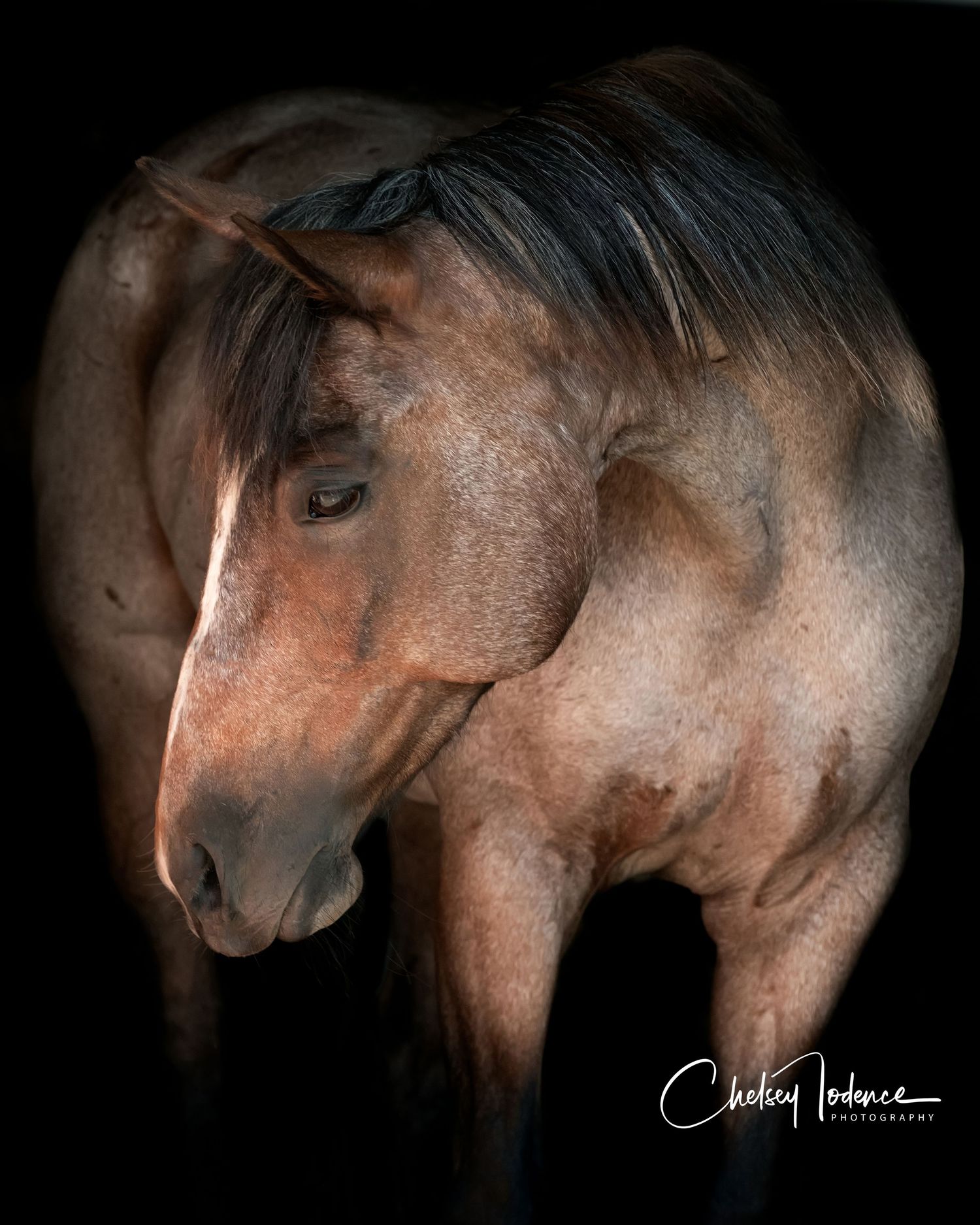
Start by imagining your horse standing straight on, directly facing you. From there, rotate the front hooves two small steps to either the left or the right. That slight adjustment naturally creates a variation of a 45-degree angle without forcing an unnatural stance.
This angle is incredibly flattering in black background equine photography because it:
- Creates shape and depth
- Shows muscle definition
- Prevents the horse from looking flat or boxy
- Adds visual interest and flow to the portrait
Head Position & Expression Matter
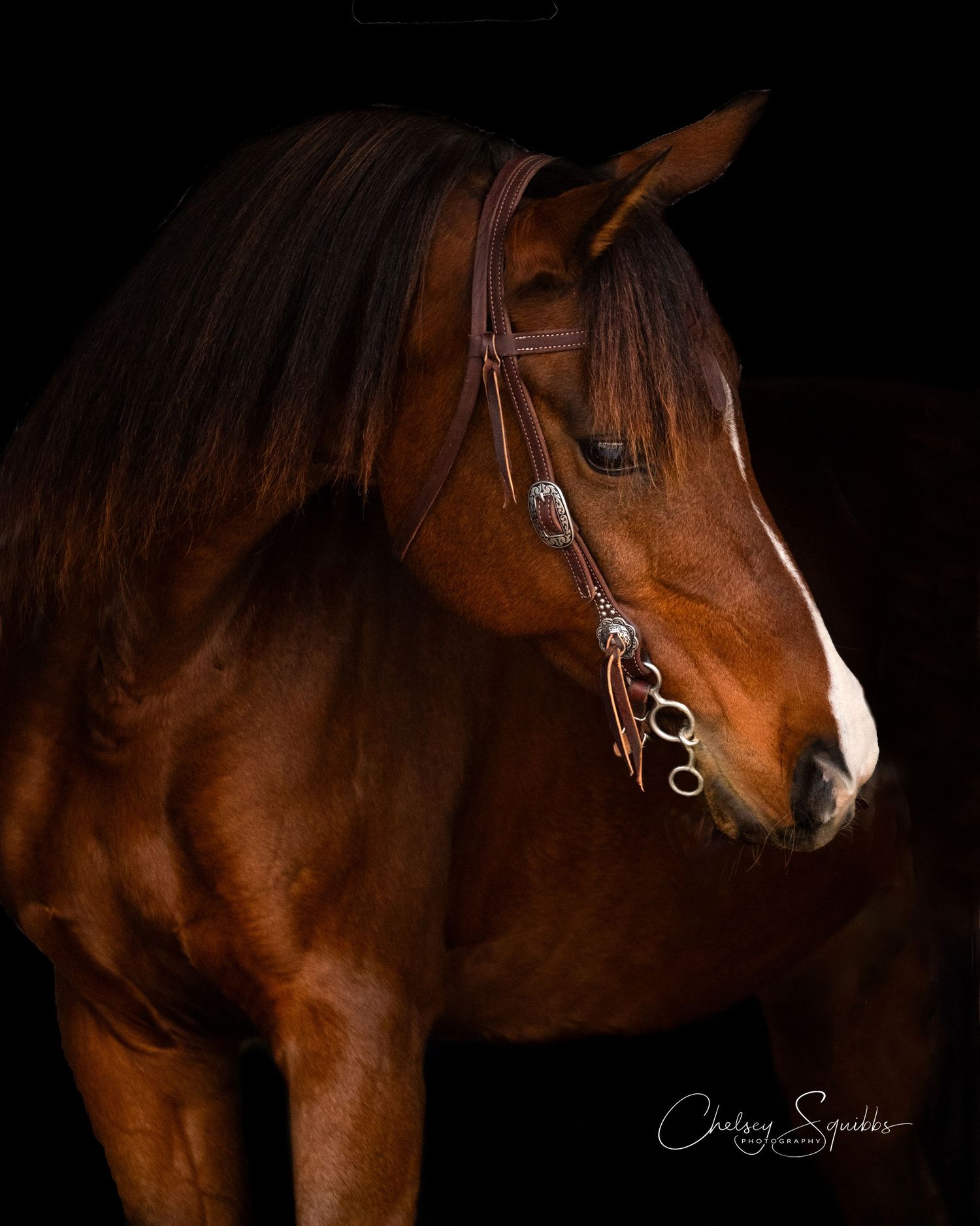
Once your horse is positioned at a 45-degree angle, the next step is expression. Ask your horse to gently curve their head inward—toward their body rather than straight ahead. This inward bend creates a soft, elegant line through the neck and adds balance to the image.
And of course, we want those ears forward. Forward ears instantly elevate a black background portrait, bringing attention to the eyes and expression. Alert, curious ears help your horse look engaged and confident on camera.
Practice Makes a Big Difference
Ground manners and practice play a huge role in the success of black background horse portraits. Horses photograph best when they understand what’s being asked of them and feel confident repeating familiar movements. Practicing this pose ahead of time—45-degree body angle, inward head bend, ears forward—sets your horse up for success during the session.
The better your horse understands this go-to pose, the smoother your session will be and the more variety we can create.
Endless Possibilities Once the Basics Are Mastered
Once your horse has mastered this foundational position, the creative options are endless. Subtle changes in head tilt, ear position, and lighting allow for a wide variety of dramatic, fine art black background equine portraits—all from the same basic setup.
This simple positioning technique is one of the keys to creating timeless, powerful black background horse photography that highlights your horse’s beauty, expression, and individuality.
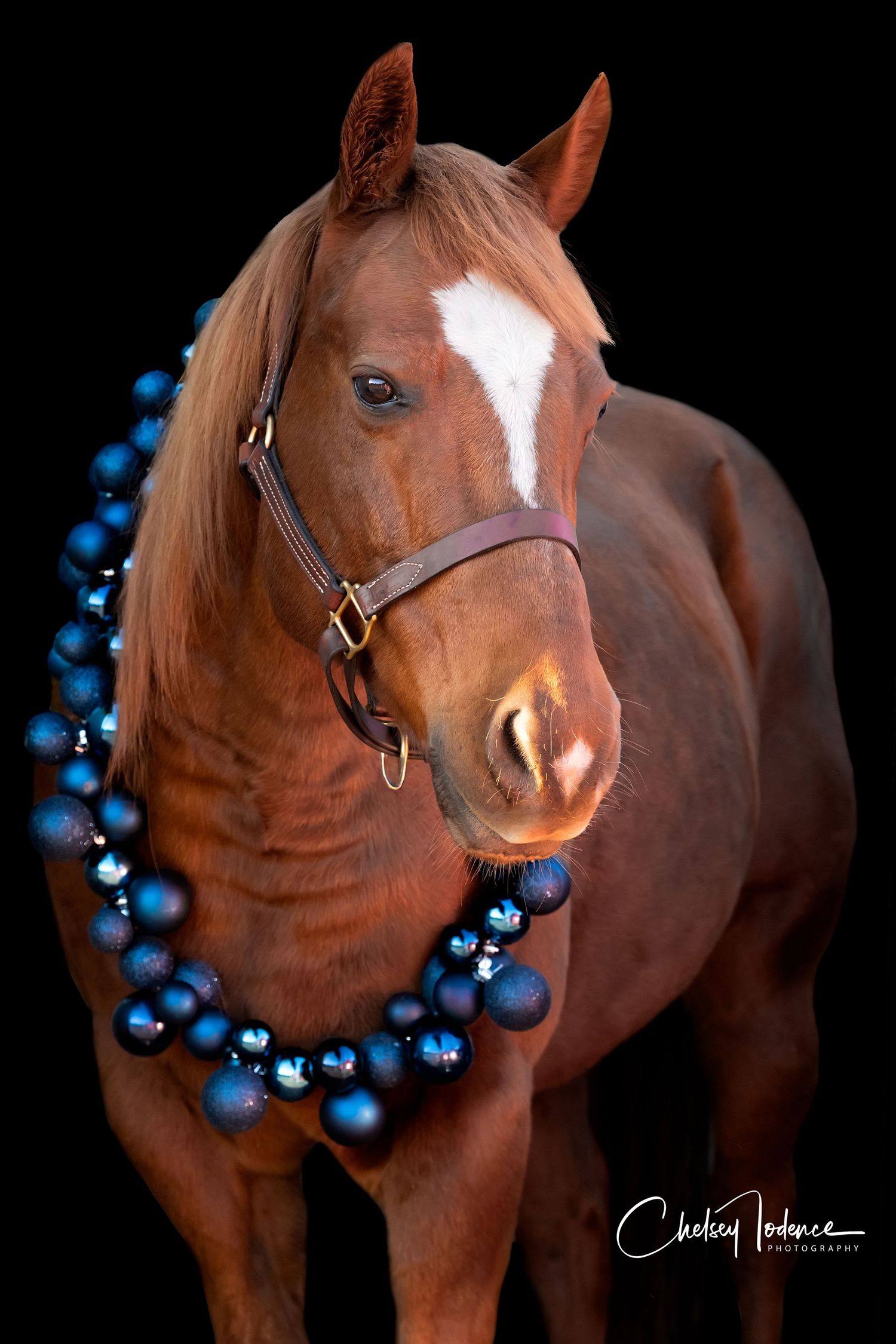
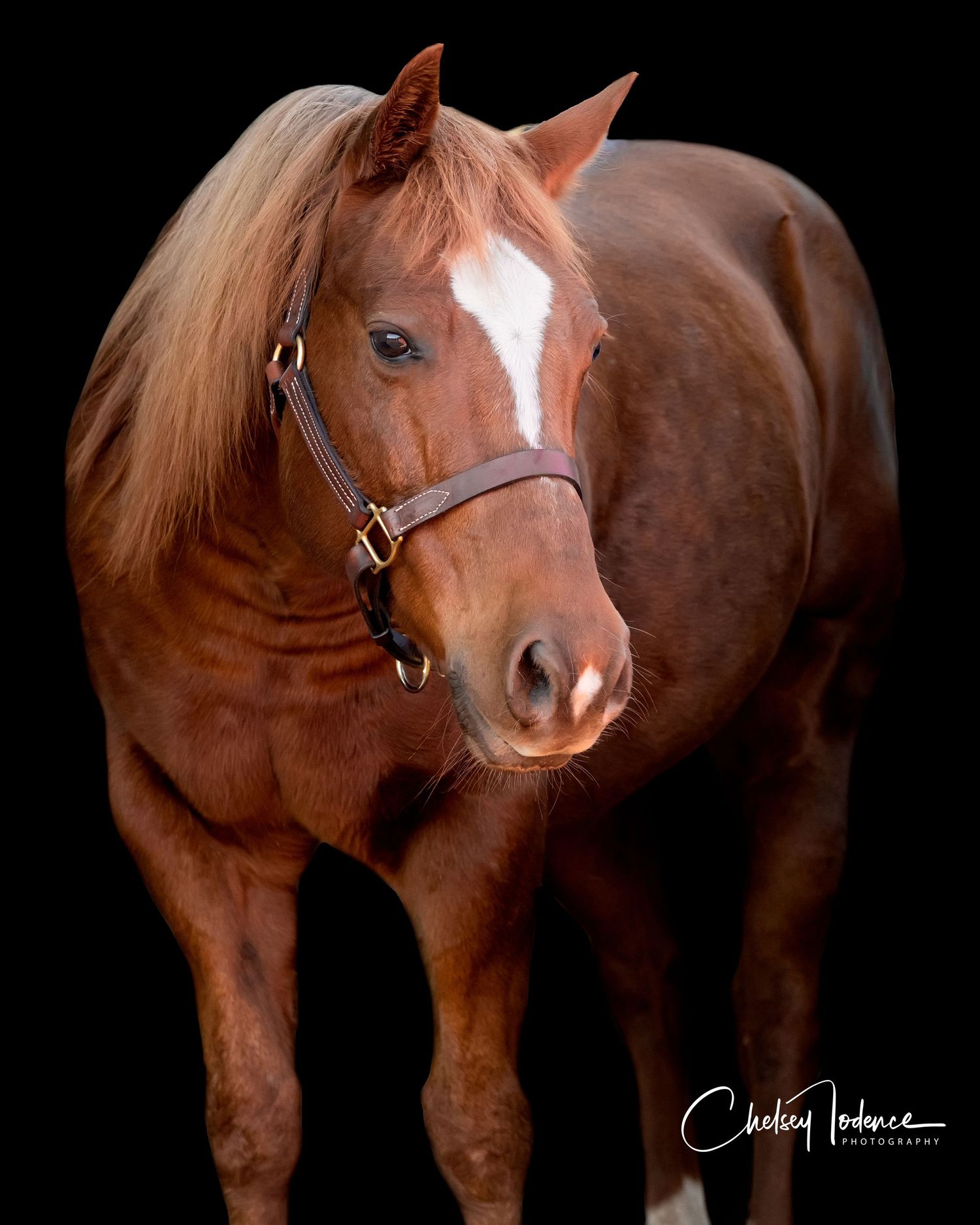
Take a look at the chestnut horse below. In the photo on the left, he’s looking in the correct direction—but he’s not truly engaged with the person off camera. While the pose is technically right, the expression feels flatter and less dynamic.
Now compare that to the photo on the right. Here, the horse is more engaged with what’s happening off screen. That added interest causes him to use his neck and eye more intentionally, creating depth, shape, and a stronger emotional connection in the image.
This level of engagement is especially important in black background horse photography. Because there are no environmental distractions, expression and posture do all the heavy lifting. When a horse is curious and mentally present, it shows through subtle changes in the eye, neck, and overall posture—turning a good portrait into a powerful one.
Encouraging engagement through sound, movement, or a familiar handler can make all the difference in creating striking, fine art black background equine portraits.
Where to Take Black Background Horse Photos
One of the next most common questions I get is where black background horse photos are actually taken. The answer often surprises people—barn aisleways and hay barns work beautifully for creating natural-looking black background equine portraits.
Using Natural Light to Create a Black Background
If you’ve ever stood at the entrance of a barn aisle, you’ve probably noticed the natural light pattern. At the start of the aisle, there is bright sunlight. As you move farther into the barn, the light gradually fades into deeper shadow. This natural transition is exactly what we want to use for black background horse photography.
We position the horse just behind the edge of the shadow—without allowing their face to touch the direct light. Placing the horse in this sweet spot allows the camera to capture clean highlights on the horse’s face, neck, and body while the surrounding space naturally falls into darkness.
Why This Technique Works So Well
By controlling light in this way, we create depth and dimension rather than a flat, artificial look. The highlights define muscle, expression, and movement, while the shadows fall away naturally. This technique creates the foundation for a dramatic black background portrait that still feels organic and timeless.
The remaining deep black background is typically refined in Photoshop after your session is complete. This final step allows for a clean, polished finish while preserving the natural highlights and shadows captured in-camera.
Using barn aisleways and hay barns in this way helps create striking, professional black background horse photos that showcase your horse’s expression and form—without needing a studio setup.
Before & After: How the Black Background Is Created
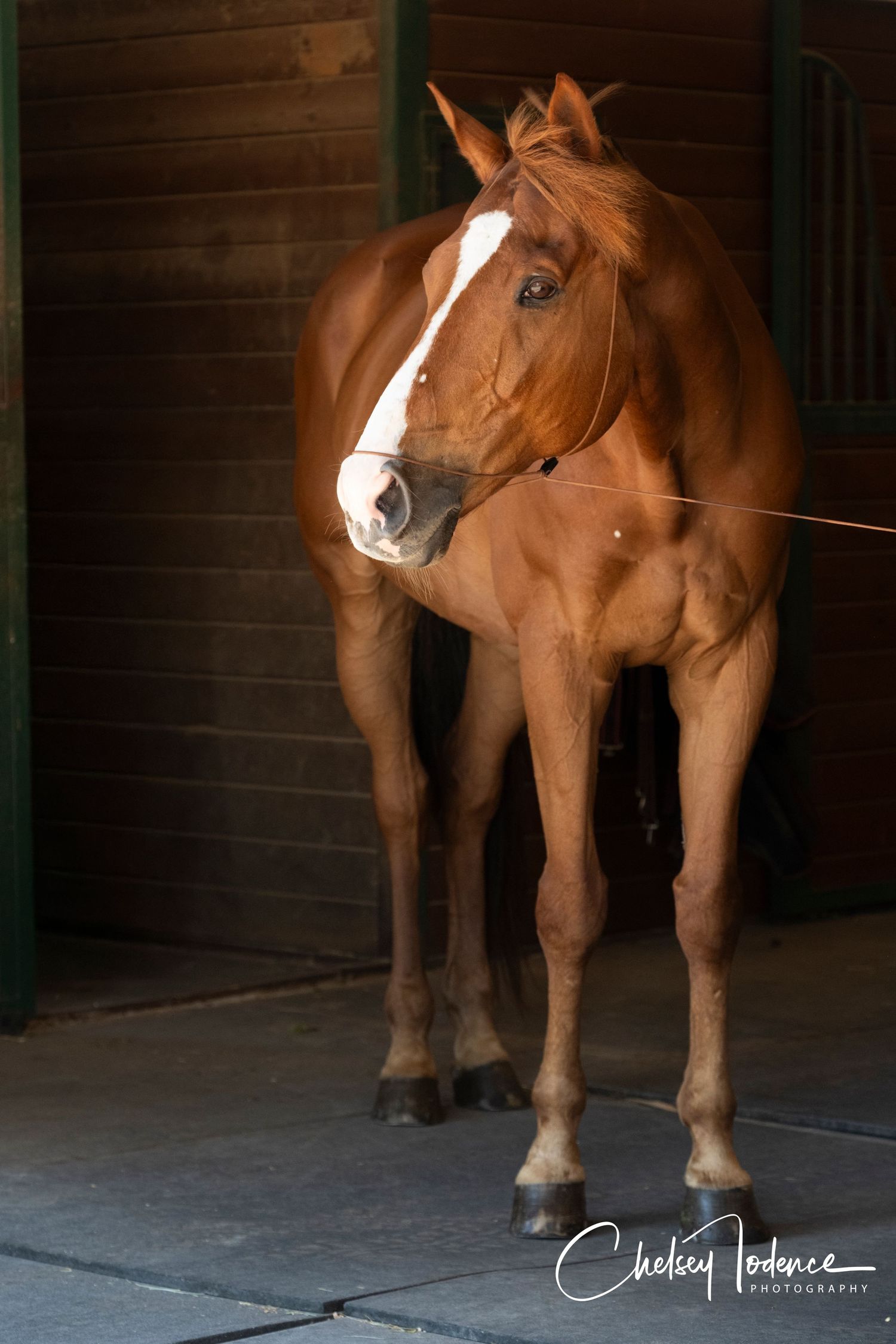
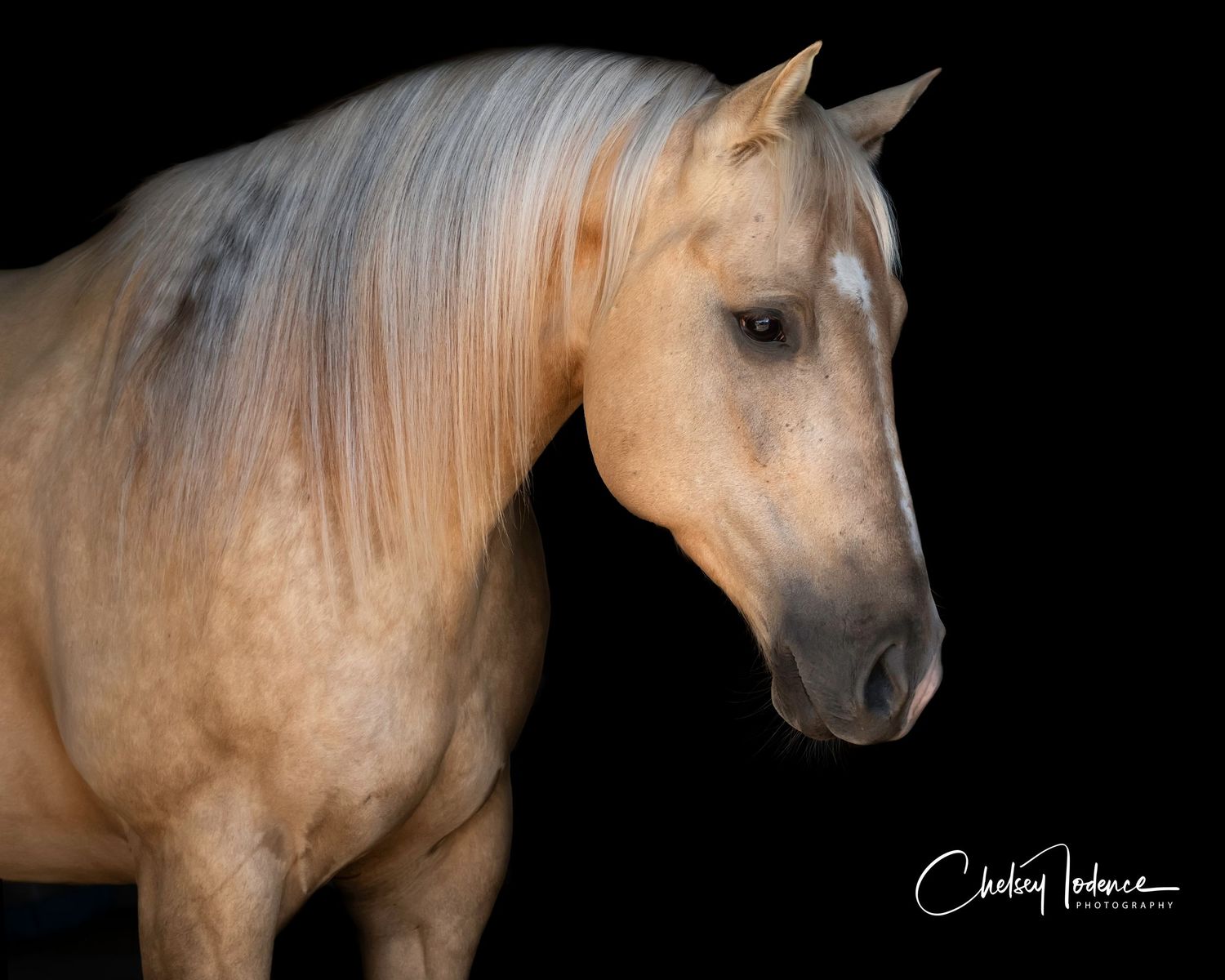
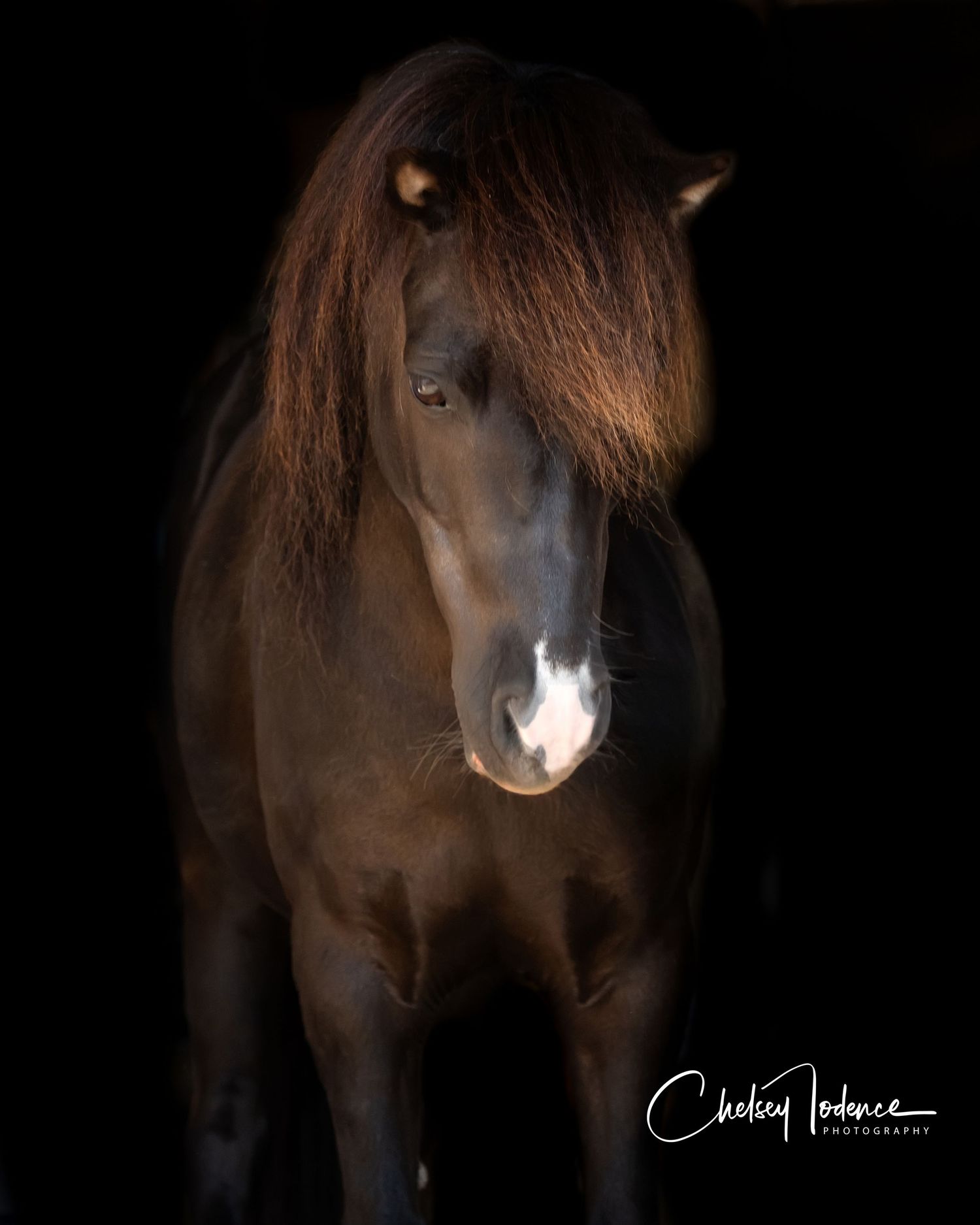
Look below for a before and after example. In the image on the left, the horse is standing in the barn aisleway, positioned just behind the edge of the shadow. In the bottom right of the photo, you’ll notice brighter light reflecting on the mats. As your eye moves farther into the image, the light gradually fades and the shadows become deeper.
Now shift your focus to the horse in this pre-edited photo. You can clearly see how the camera is already capturing natural highlights on the horse’s face, neck, and body, while the surrounding areas fall into shadow. This balance of light and dark is exactly what we aim for during black background equine photography sessions.
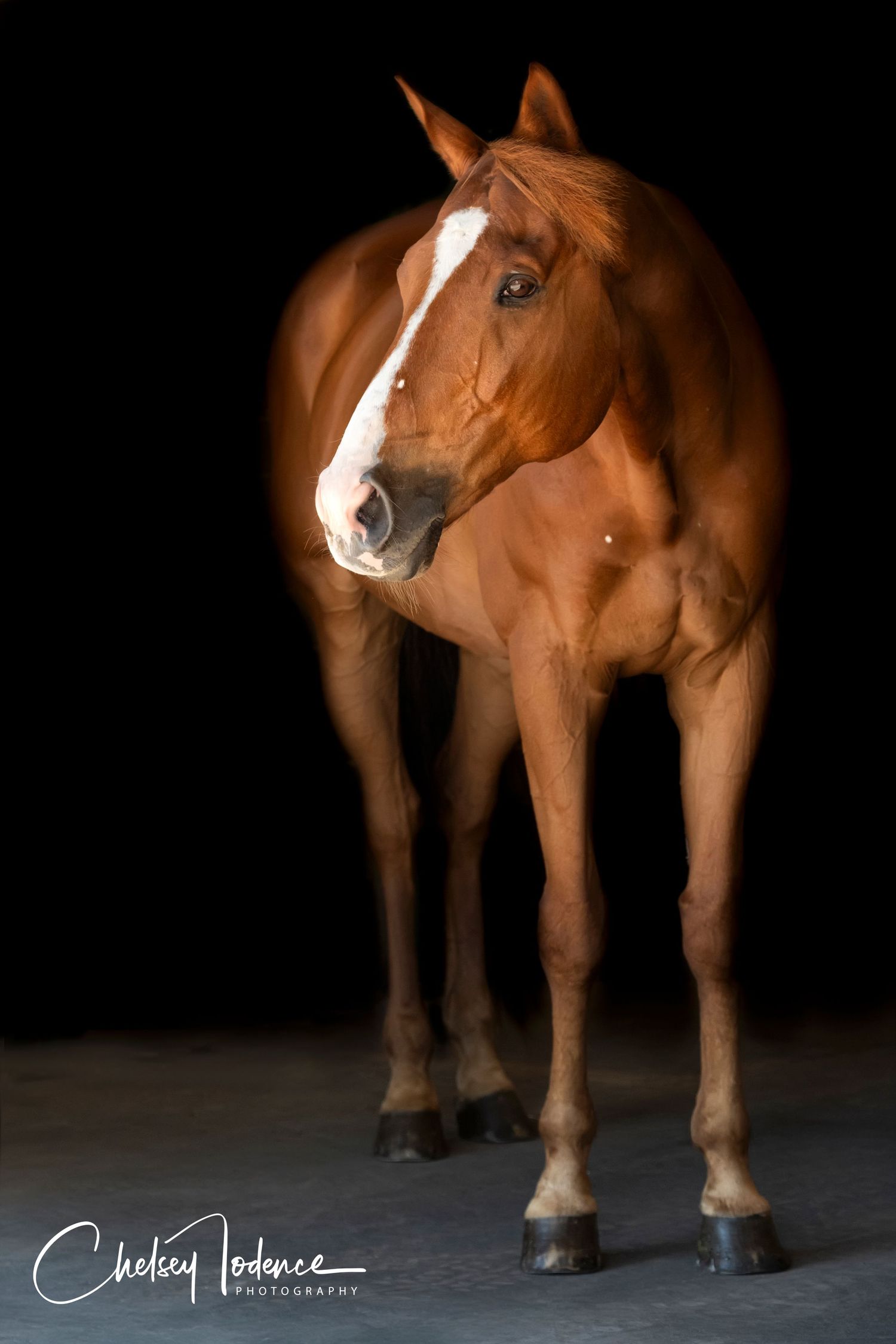
The image on the right shows the final product. After your session, Photoshop is used to deepen and clean up the background while preserving the natural highlights and shadows captured in-camera. This process creates a dramatic, polished black background portrait without losing detail, depth, or realism.